
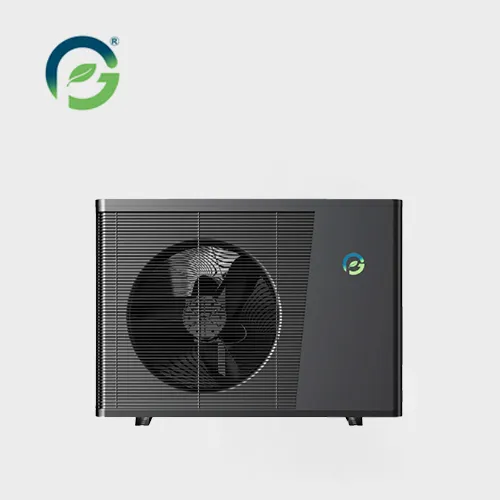
R290 MONOBLOC DC INVERTER HEAT PUMP
A+++ rated efficiency, our r290 monobloc heat pump delivers 75°C hot water for residential retrofits. As a leading r290 heat pump supplier, we offer OEM solutions.
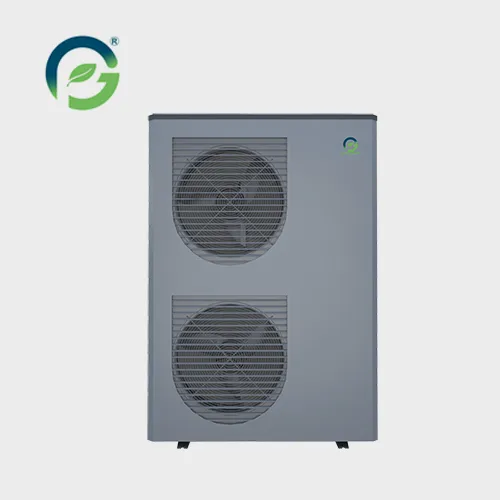
View productSourcing a monobloc heat pump starts with the same question every time: does the supplier build the whole unit, or does it assemble parts from other people's shelves? This guide is written for importers, HVAC wholesalers and private-label brands comparing heat pump manufacturers on a single platform, and it explains what to request before you shortlist any of the all in one heat pump manufacturers for a residential or light commercial program. The reference product throughout is the Greenpower R290 Monobloc DC Inverter Heat Pump: one outdoor module connected to water piping only, A+++ rated, with a 6 kW to 16 kW line-up and 75 °C maximum water output.
Before you compare quotations, fix the vocabulary. Each term below changes the installation scope, the documentation you must collect and the after-sales model you are signing up for.
All-in-One
An all-in-one layout means the hydronic and refrigeration sides ship as a single module. On the R290 Monobloc this removes the indoor unit entirely, so the installer works on water connections and commissioning rather than refrigerant pipework. For you, it shortens installation time and reduces the number of trades in your training and warranty program.
Monobloc
Monobloc construction means the outdoor unit is connected exclusively to water piping — no refrigerant lines enter the building and no refrigerant handling is required on site. That single detail decides which installers can fit the product in your market and how you position it against split systems.
R290
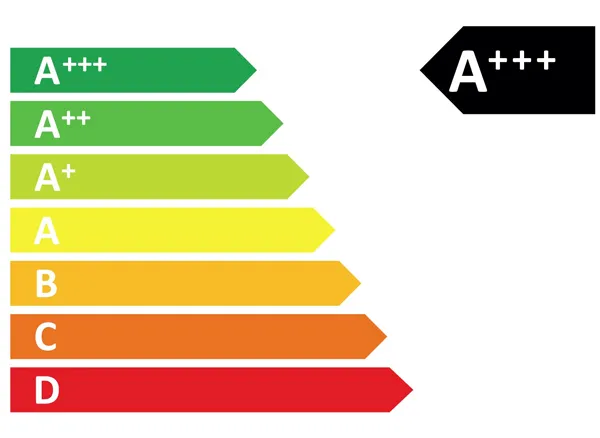
The R290 Monobloc runs on R290 refrigerant, stated by the manufacturer at 68% reduced global warming potential versus a conventional refrigerant, and rates A+++ on the energy label. R290 is an A3 flammable refrigerant, so storage, transport, labelling and installer competence become part of your supplier qualification, not a footnote.
Four buying roles reach this page, and each one approves a purchase for different reasons. Read your own row first, then use the criteria matrix to build the questions you will send to every supplier on your list.
Needs a stable line-up, market-ready documentation and a product that installers will not call back about. Decides on certification pack, capacity coverage and spare-parts availability.
Sells to contractors who fit and forget. Decides on unit range, boxed accessories, quick-reference technical sheets and how fast a replacement unit can ship.
Wants the hardware to carry its own identity. Decides on nameplate and packaging customisation, manual languages and whether the control interface can match brand expectations.
Builds the business case. Decides on configuration flexibility, component-supplier sourcing, forecast volumes and the warranty process behind the product.

| Buying role | Capacity & line-up | Refrigerant & compliance | Customisation | After-sales focus |
|---|---|---|---|---|
| Importer / distributor | Full 1Ø 6–16 kW spread plus 3Ø 16 kW | R290 A3 safety documentation and A+++ label evidence | Nameplate, carton print, manual language | Spare parts list and warranty claim route |
| HVAC wholesaler | Products installers ask for by name | Test reports and energy label copies for the counter | Accessory kits and quick-start sheets | Replacement unit turnaround |
| Private-label brand | Configuration mix per market | Compliance pack re-labelled to your brand | Nameplate, packaging, manuals, interface wording | Field failure reporting and technical escalation |
| Procurement / OEM | Volume split across the line-up | Audit-ready certification and traceability records | Component sourcing for configured builds | Production capacity and long-term supply |
Work through these eight items with every candidate factory. Each one produces a document, a photo or a signed commitment you can file — an answer over the phone is not a qualification result.
These are the published details of the reference product. Use them in your datasheet, your tender response and your installer training material — and ask every alternative supplier to match them item by item.
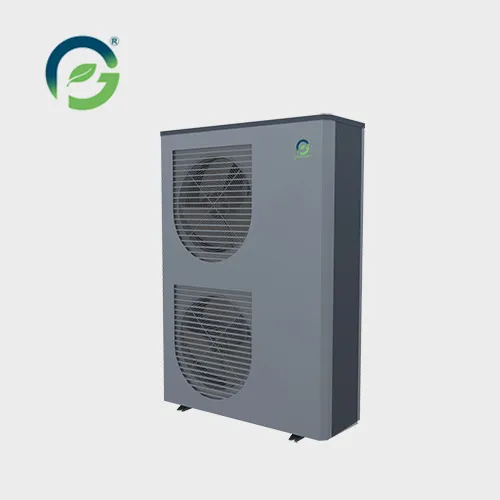
| Product name | R290 Monobloc DC Inverter Heat Pump |
| Monobloc line-up | 1-phase: 6 / 9 / 12 / 16 kW · 3-phase: 16 kW |
| Refrigerant | R290, stated at 68% reduced global warming potential versus conventional refrigerant |
| Compressor | Full DC inverter |
| Energy label | A+++ |
| Heating operation range (outdoor air) | -25 ~ 45 °C |
| Leaving water temperature | 10 ~ 75 °C |
| Maximum output temperature | 75 °C |
| Control interface | 5-inch color touchscreen with remote smartphone control |
| Piping connection | Water piping only — no indoor refrigerant piping |
Customisation on a monobloc heat pump is negotiated item by item, not as one package. Use the three columns below to separate what ships as standard, what is discussed with the supplier, and what you must confirm in writing before you quote your own customers. The manufacturer cooperates with established component suppliers, which is what supports configured builds.
| Item | Standard | Discussed with supplier | Confirm before quoting |
|---|---|---|---|
| Branding and nameplate | Manufacturer product identity | Private-label nameplate options | Artwork approval steps and minimum order |
| 5-inch color touchscreen | Included on the unit | Interface language and wording | Which languages are loaded at the factory |
| Wi-Fi / smartphone app | Wi-Fi control solution | App identity presented to end users | App availability and setup in your market |
| Boiler interlocking | Interlocking operation with a 3rd-party boiler | Matching your local boiler brands | Boiler models already tested with the control |
| Packaging and manuals | Standard export packaging | Carton print and manual language sets | Print-ready files and packing-mark rules |
| Voltage and frequency | Single-phase and three-phase options in the line-up | Market-specific configuration | Target grid specification and plug standard |
| Capacity mix | 1Ø 6 / 9 / 12 / 16 kW, 3Ø 16 kW | Model mix per market | Forecast volume per capacity |
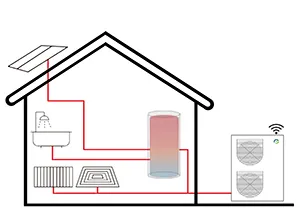
Most failed heat pump quotations come from selling the wrong specification to a valid project. Read the scenario closest to your customer, check the published specification against it, then confirm the design figure before you commit.
| Project scenario | Specification that decides it | Buyer decision |
|---|---|---|
| Boiler replacement in a building with old radiators | Maximum output temperature 75 °C; leaving water 10 ~ 75 °C | Compare the existing radiator design temperature with the published 75 °C ceiling before promising a like-for-like swap. |
| Cold-climate market with sub-zero winters | Heating operation range -25 ~ 45 °C outdoor air | Check the local design outdoor temperature and confirm that the chosen capacity still meets the load at that figure. |
| Apartment block with no plant room | Monobloc construction — water piping only, no indoor unit | Decide the outdoor mounting position and the water pipe route before the installer visits, and confirm the local service clearance. |
| Customer wants heating plus domestic hot water | Multiple solutions: heating, cooling and DHW supply | Confirm the DHW demand and cylinder arrangement for the project rather than assuming the unit covers it in every layout. |
| Noise-sensitive residential street | Low noise mode operation with schedule setting | Confirm the local night-time noise limit and choose the installation position accordingly. |
| Market with incentive or subsidy schemes | A+++ energy label; R290 low-GWP refrigerant; smart grid compatibility | Collect the label and refrigerant documentation the scheme requires before you submit the application. |
| Retrofit that must keep the existing boiler | Interlocking operation with a third-party boiler; hybrid operation | Confirm which boiler models the control has been set up with before proposing a hybrid layout. |
Suppliers respond fastest to enquiries that state the market, the model mix and the documentation requirement. Send these six items and most commercial questions answer themselves in the first reply.

Send your market, model mix and documentation requirements to the sales team and ask for the R290 Monobloc DC Inverter Heat Pump details, R290 A3 safety documentation and the A+++ performance evidence in one reply. OEM and private-label projects can be discussed in the same enquiry.
Keep adjacent product options together for a faster catalog comparison.
A+++ rated efficiency, our r290 monobloc heat pump delivers 75°C hot water for residential retrofits. As a leading r290 heat pump supplier, we offer OEM solutions.
View product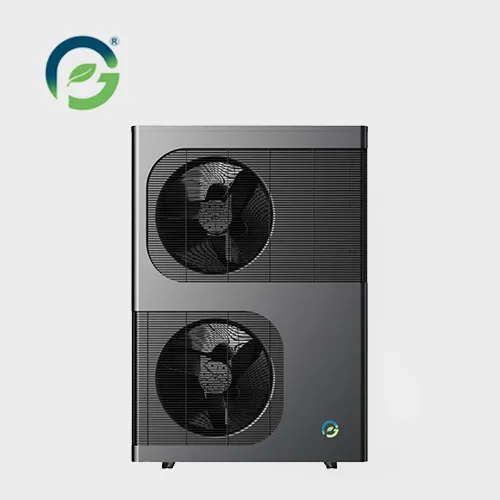
Monobloc DC Inverter Heat Pump offers efficient residential heating. As a leading r290 heat pump supplier, we provide scalable r290 heat pump solutions.
View product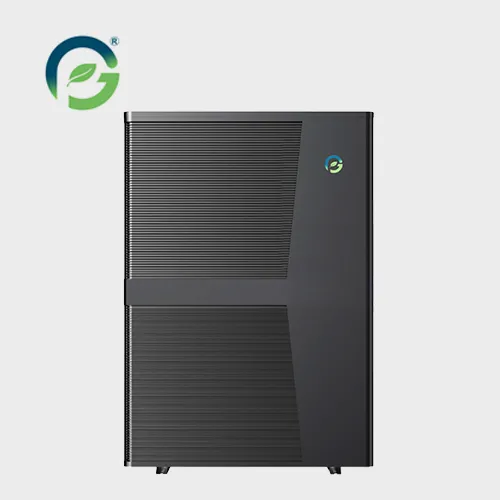
Source premium r290 monobloc heat pump units designed for efficient residential retrofits. Reach 75°C output with this high-performance r290 heat pump.
View productIndoor and outdoor units are combined into a single module, and the outdoor unit is connected exclusively to water piping. No refrigerant piping work is needed inside the building, so there is no indoor unit to place and no refrigerant handling on site. That reduces installation and commissioning time and removes one trade from the job.
The monobloc line-up covers single-phase 6, 9, 12 and 16 kw, plus a three-phase 16 kw model. Confirm current availability for the specific capacity you intend to stock before you publish it in a price list.
The unit runs on r290 refrigerant, stated at 68% reduced global warming potential compared with a conventional refrigerant, with a full dc inverter compressor. It carries an a+++ energy label. Ask the supplier for the performance evidence behind the label if you need it for a subsidy application.
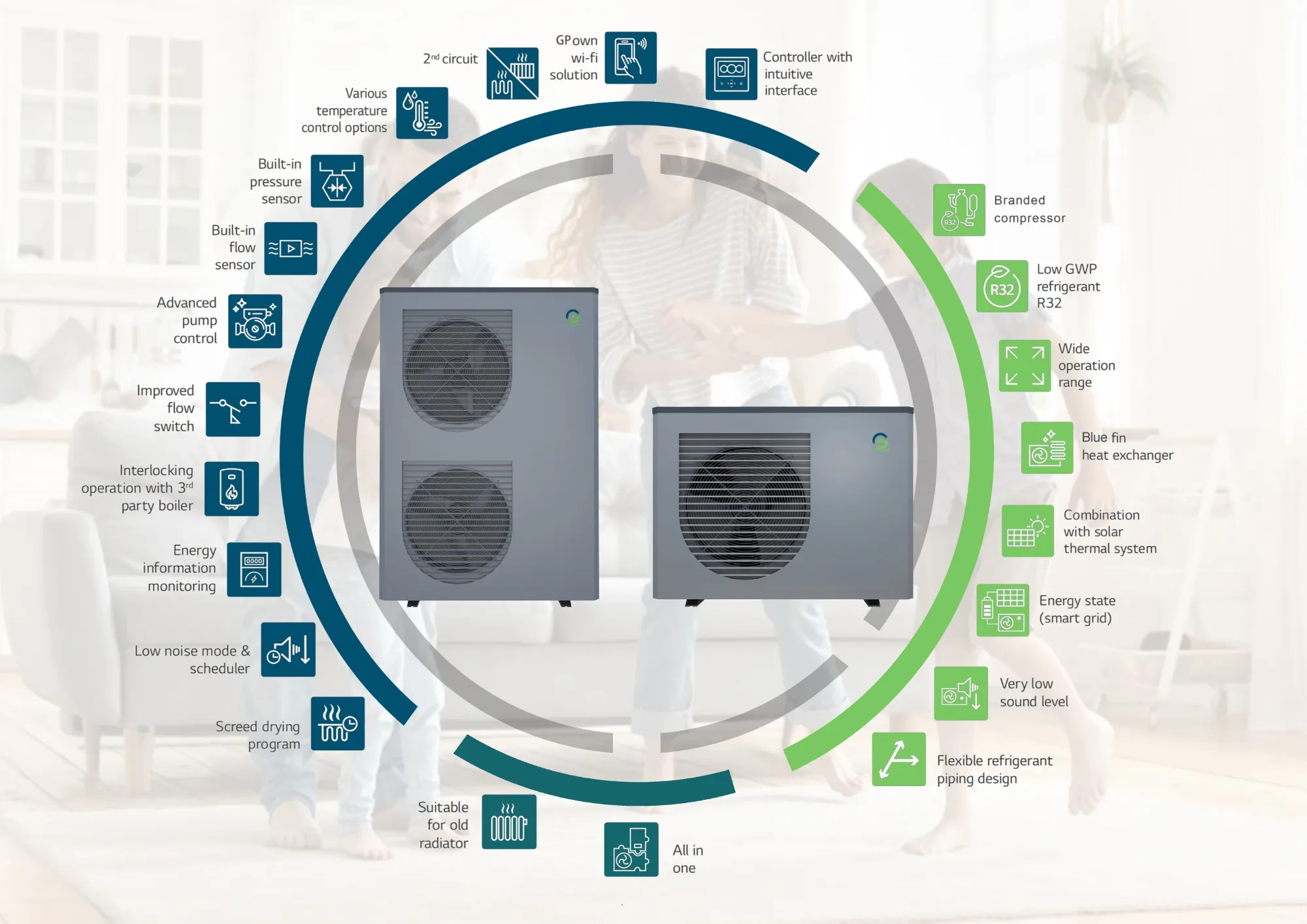
In heating mode the published range is -25 °c to 45 °c outdoor air, with leaving water between 10 °c and 75 °c and a maximum output temperature of 75 °c. The high water temperature is what allows the unit to work with existing radiator systems instead of requiring new emitters.
Control is through a 5-inch color touchscreen on the unit plus remote smartphone control over a wi-fi solution, with smart grid connectivity. Interlocking operation with a third-party boiler and a low noise mode with schedule setting are also part of the published feature set, which supports hybrid systems and noise-sensitive installations.
The unit is published as supporting multiple solutions — heating, cooling and domestic hot water supply — and hybrid operation with existing facilities, for residential and light commercial heating and cooling. Match the capacity and the emitters to the actual project load rather than assuming one model fits every building.


